Published dossier
Weekly Tools Field Report: Orchestration Matures as Gas City Enters the Frame
OpenSpec widens integration breadth while Entire.io pairs $60M seed momentum with checkpoint-oriented workflows. Gas City changes the benchmark: declarative packs, versioned work memory via Dolt/MEOW, and configurable review topologies make 'SDK-built agent factories' a standing comparison point for any governance layer claiming context engineering depth.
Week: 2026-W19
Executive Readout
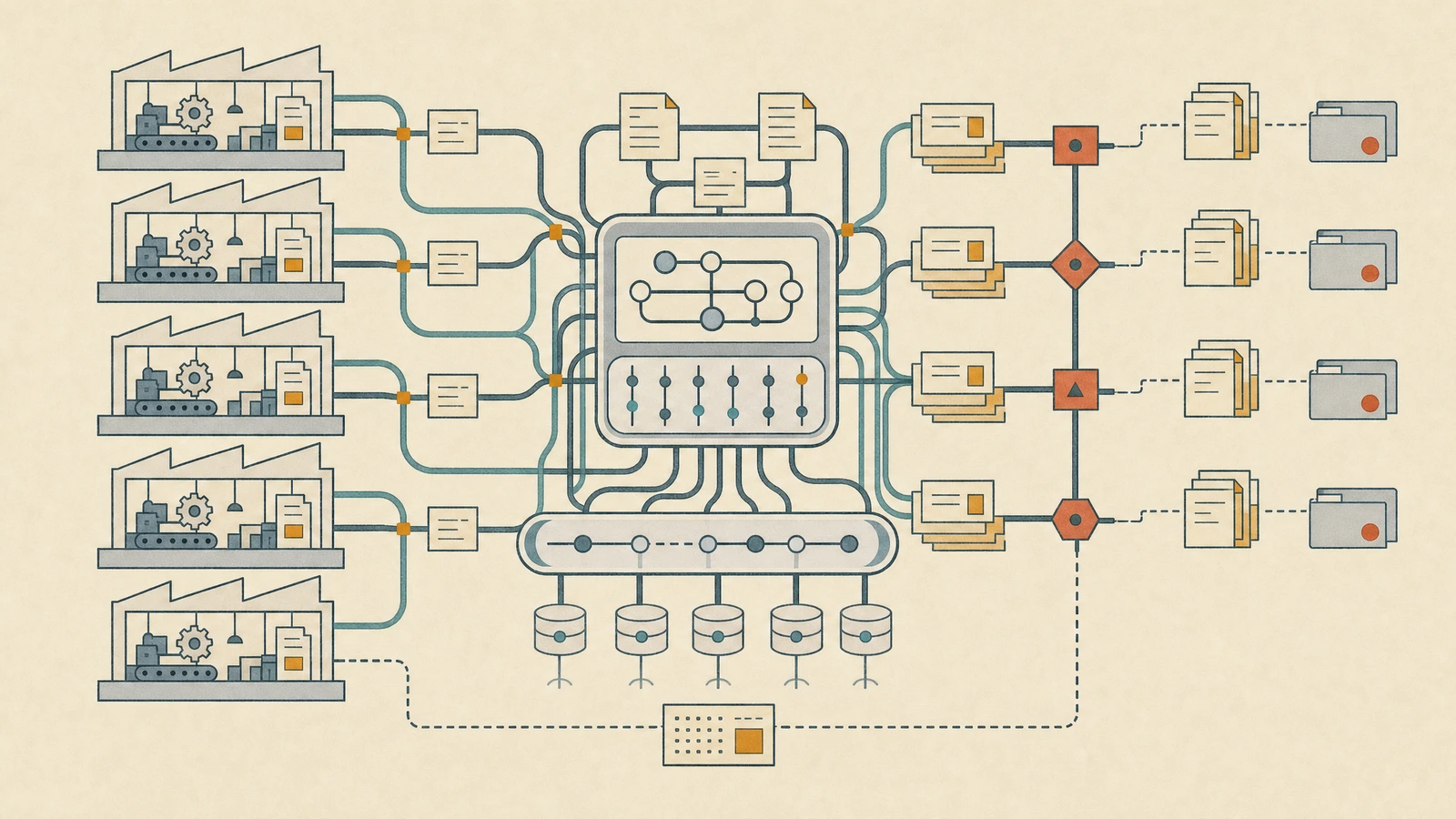
This week produced a focused competitor signal set centered on OpenSpec, Entire.io, and Gas City. OpenSpec continues to widen its integration surface across agent tools and reinforced its public category position through its Y Combinator launch presence. Entire.io paired commercial momentum with product/runtime signals around checkpoint workflows. Gas City now changes the orchestration benchmark: the v1.0.0 docs/repo and Steve Yegge’s launch narrative make lights-on multi-agent factories, versioned work memory, and de-SaaS positioning a standing lens for Spec Kitty.
For Spec Kitty specifically, this week saw release-candidate hardening (3.2.0rc1-rc3) focused on TeamSpace mission-state repair/validation and the implement-review-retrospect control loop. The audit engine merged May 2 adds read-only mission-state inspection with seven artifact classifiers—durable audit trail without versioned work memory, aligning with the “light-factory observability” axis from Gas City’s framework.
Tools This Week
Observed this week, ordered by narrative flow:
- Gas City (repo; launch post) - Recent SDK launch reframes Gas Town as composable SDK for observable multi-agent dark factories using MEOW stack (Beads + Dolt); declarative packs/formulas, versioned work memory via Dolt/MEOW, configurable review topologies.
- OpenSpec (launch page; releases) - Continues shipping integration-layer breadth across multiple agent CLIs, including Qoder CLI, Gemini CLI, RooCode, Cline, iFlow-cli, and Antigravity; Y Combinator launch page positions it as open-source spec framework emphasizing persistent markdown specs, plan review, and broad assistant support.
- Entire.io (company launch) - Checkpoint-oriented workflow development; launch materials reinforce commercial momentum; context durability becoming infrastructure.
- Spec Kitty (CHANGELOG; audit engine PR) - Recent release candidates deliver TeamSpace mission-state repair/validation surface; audit engine merged in early May provides read-only inspection of multiple artifact types; implement-review-retrospect loop stabilization continues.
- BMAD-METHOD (release) - Recent release shows enterprise deployment maturity with non-interactive CI/Docker flags, tool ID validation, channel handling, config robustness; brownfield epic scoping reduces file churn; CSV data integrity fixes demonstrate production hardening.
- GitHub Spec Kit (repo; GitHub blog) - Toolkit with broad public traction, agent integrations, community extensions, and presets for workflow customization; GitHub’s official toolkit validates SDD methodology mainstreaming.
- Cursor (Oasis partnership) - Oasis partnership adds intent-based access and audit trails for Cursor agents; IDE-bound governance layer expanding beyond single-agent execution with enterprise security wrapper.
- Dark Factory (peter-stratton) (repo) - Active maintenance confirmed by the latest planning commit; 3-agent implement→review→merge loop with scenario specs as verification contract; closest OSS tool to Spec Kitty’s pre-merge audit pattern.
- Agentic Code (shinpr) (framework) - AGENTS.md framework with test-first workflows, quality gates, and separate-session review patterns; “fresh session for review” mirrors Trycycle’s fresh-agent pattern.
- Autonomi (forum update) - Desktop app with client/node codebase separation, upload reliability fixes; forum updates document infrastructure focus (decentralized storage) with network throughput improvements and quality gate infrastructure rather than coding workflow governance.
What Changed
Gas City shifts the orchestration benchmark. The v1.0 SDK launch reframes the category from “tool runs agents” to “SDK builds agent factories.” Steve Yegge’s Welcome to Gas City essay supplies first-order category narrative around observable multi-agent factories, while the GitHub repo and docs verify declarative packs/formulas via SDK, versioned work memory via Dolt/MEOW stack, and configurable review topologies.
OpenSpec widens integration breadth. The official changelog shows recent support and refinements across multiple agent CLIs, including Qoder CLI, Gemini CLI, RooCode, Cline, iFlow-cli, and Antigravity. Its Y Combinator launch page positions it as an open-source spec framework for coding agents emphasizing persistent markdown specs, plan review, and broad assistant support—plan-review language getting mainstream distribution.
Entire.io pairs commercial momentum with product signals. Official surfaces reinforce checkpoint-oriented workflow development. The company launch post reinforces commercial traction; context durability is becoming infrastructure. Checkpoint capture linked to Git history provides durable context for replayability and audit trails. Watch for deeper roadmap or architecture detail following the launch.
Spec Kitty hardens release confidence. Release candidates 3.2.0rc1-rc3 (May 5-6) deliver deterministic doctor mission-state --fix repair for historical state, TeamSpace dry-run validation against the 5.0.0 event contract, and implement-review-retrospect control loop stabilization including stale review verdict handling, finalized-board routing, and canonical review feedback pointers. The audit engine merged May 2 adds read-only mission-state inspection with seven artifact classifiers, while the governance setup workflow shows why those checks belong in a broader control surface rather than a standalone lint pass.
BMAD-METHOD shows enterprise deployment maturity. v6.6.0 release (Apr 29) includes non-interactive CI/Docker flags (--set/--list-options), tool ID validation, channel handling, config robustness; brownfield epic scoping with Implementation Efficiency principle reduces file churn; multiple CSV data integrity fixes demonstrate production hardening.
Cursor expands governance at distribution level. The Oasis partnership (May 1) adds intent-based access and audit trails for Cursor agents—IDE-bound governance layer expanding beyond single-agent execution but no versioned work memory or independent arbiter layer.
Tool-By-Tool Notes
1. Gas City
Gas City now changes the orchestration benchmark. The v1.0 SDK launch (Apr 27) rewrites Gas Town as composable SDK for building observable multi-agent dark factories using MEOW stack (Beads + Dolt). Steve Yegge’s Medium post supplies category-defining narrative from an influential voice. SDK framing shifts comparison from “tool runs agents” to “SDK builds agent factories”—directly overlaps Spec Kitty’s mission/doctrine positioning with declarative packs/formulas, versioned work memory via Dolt/MEOW, and configurable review topologies.
2. OpenSpec
OpenSpec continues shipping integration-layer breadth across agent tools. Its official changelog shows recent support for multiple agent CLIs, including Qoder CLI, Gemini CLI, RooCode, Cline, iFlow-cli, and Antigravity. The Y Combinator launch reinforces its public category position as open-source spec framework emphasizing persistent markdown specs, plan review, and broad assistant support. Compatibility breadth is becoming a competitive weapon—workflow-layer products competing on how many agent surfaces they can support, not just methodology depth.
3. Entire.io
Entireio continues to sharpen its context-layer story. Official surfaces reinforce checkpoint-oriented workflow development with session capture linked to Git history. The company launch paired commercial momentum with product signals around checkpointed workflows. Context durability is becoming infrastructure—memory, replayability, and Git-linked reasoning are product categories of their own. Watch for deeper architecture or roadmap details following the launch.
4. Spec Kitty
Spec Kitty shipped release candidates 3.2.0rc1-rc3 (May 5-6) focused on TeamSpace mission-state repair/validation and implement-review-retrospect control loop stabilization. The CHANGELOG documents deterministic doctor mission-state --fix repair for historical state, TeamSpace dry-run validation against the 5.0.0 event contract, and hardening of stale review verdict handling, finalized-board routing, and canonical review feedback pointers. The audit engine PR #948 merged May 2 adds read-only mission-state inspection with seven artifact classifiers, and the DRG-backed context model explains the larger context-governance pattern around those artifacts.
5. BMAD-METHOD
BMAD-METHOD v6.6.0 (Apr 29) shows enterprise deployment maturity with non-interactive CI/Docker flags (--set/--list-options), tool ID validation, channel handling, and config robustness. Brownfield epic scoping with Implementation Efficiency principle reduces unnecessary file churn; multiple CSV data integrity fixes demonstrate production hardening. Installer hardening is becoming a competitive dimension—OSS workflow engines moving beyond prototypes to production installs.
6. GitHub Spec Kit
GitHub Spec Kit remains the strongest distribution-level spec-driven baseline: broad public traction, agent integrations, a community extension/presets ecosystem, and an official GitHub blog narrative that specifications should become executable. GitHub’s distribution advantage makes this key SDD methodology competitor—declarative process units via extensions/presets but no versioned work memory beyond Git, single-agent workflow framework rather than multi-agent governance.
7. Cursor
Cursor + Oasis partnership (May 1) adds intent-based access and audit trails for Cursor agents. The partner blog validates runtime control plane trajectory—IDE-bound governance layer expanding beyond single-agent execution but no versioned work memory or independent arbiter layer, single-agent scope with enterprise security wrapper.
8. Dark Factory (peter-stratton)
Dark Factory shows active maintenance with May 1 commit “revised phase 41 planning.” Both surfaces confirm the same 3-agent implement→review→merge loop, scenario specs as verification contract, and explicit de-SaaS narrative (“Fire your SaaS, not your engineers”). Closest OSS tool to Spec Kitty’s pre-merge audit pattern with functional reviewer against scenario specs—no declarative packs/formulas or versioned work memory beyond Git. Track the GitHub releases for canonical release state.
9. Agentic Code (shinpr)
Agentic Code v0.7.0 (Mar 30, 2026) implements AGENTS.md framework with test-first workflows, quality gates, and separate-session review patterns. The AGENTS.md standard tells AI coding agents how to work in projects—workflow frameworks competing on process documentation rather than runtime control planes. “Fresh session for review” mirrors Trycycle’s fresh-agent pattern addressing context accumulation differently from Spec Kitty’s WP lifecycle ADRs.
10. Autonomi
Autonomi v0.6.7 desktop app (Apr 30) delivers client/node codebase separation and upload reliability fixes; the forum update documents infrastructure focus (decentralized storage) with network throughput improvements; no versioned work memory or multi-agent governance beyond swarms.
Governance Implications
Gas City forces a cleaner boundary. Spec Kitty should claim workflow governance, spec-to-implementation control, and acceptance evidence, while being explicit that it is not trying to be a universal runtime provider. The week reinforced that the category narrative around spec-driven, context-native, and lights-on agent orchestration is strengthening.
Compatibility breadth is becoming competitive. OpenSpec’s rapid assistant integration cadence suggests workflow-layer products are competing on how many agent surfaces they can support, not just methodology depth. That extends the multi-tool governance gap: breadth matters only if teams can still govern what every agent is allowed to touch. Spec Kitty should keep monitoring integration breadth closely while leaning into differentiated workflow control, governance, and execution rigor.
Context durability is infrastructure. Entire.io’s checkpoint and storage signals point toward a market where memory, replayability, and Git-linked reasoning are product categories of their own. This is the same buyer problem as context engineering as the missing governance layer: teams need durable context that agents can use without turning every change into oral tradition. Spec Kitty should keep treating runtime state and traceability as competitive terrain.
Plan-review language is mainstreaming. OpenSpec’s YC framing reinforces the idea that the planning phase, not just code generation quality, is becoming a mainstream buying and adoption narrative. That matters more as the August enforcement cliff turns AI oversight from aspiration into operating pressure. This validates Spec Kitty’s mission-review CLI positioning against spec-to-code fidelity.
Watch Next Week
- Check whether OpenSpec’s integration velocity continues into another major changelog step.
- Monitor whether Entire.io publishes deeper roadmap or architecture detail following its launch.
- Track Gas City v1.x docs and releases, especially packs/formulas, Supervisor REST API, runtime providers, and Factory Worker API details.
- Compare Spec Kitty missions/work packages against Gas City packs/formulas so the positioning boundary is concrete instead of vibes.
- Re-run BMAD-METHOD with tighter primary-source searches to distinguish “quiet week” from “missed movement.”
- Watch for competitor positioning comparisons and roadmap announcements that clarify market boundaries.
Sources
- Gas City GitHub repo
- Steve Yegge: Welcome to Gas City (Medium)
- OpenSpec Y Combinator launch
- Entire.io company launch
- Spec Kitty CHANGELOG
- Spec Kitty PR #948 (audit engine)
- Spec Kitty governance setup workflow
- Spec Kitty DRG-backed context model
- BMAD-METHOD v6.6.0 release
- GitHub Spec Kit repo
- GitHub blog: Spec-driven development with AI
- Cursor + Oasis partnership
- Autonomi forum update (Apr 30)
- Agentic Code framework
Methodology: This report starts from an existing competitive-intelligence collection and validates public claims against source URLs before publication. Weekly signals are ranked by evidence quality, relevance to spec-driven development and agentic coding governance, and buyer salience for engineering, platform, security, and product leaders. Tools are ranked only when the week’s evidence supports a public claim; weaker names remain watchlist targets until primary-source support improves.