Field notes
Govern the agentic shift before it governs you.
Source-grounded analysis for teams building governance, auditability, and accountability around AI coding agents.

Harness Engineering: The Missing Governance Layer Between AI Coding Specs and Production Safety
Across every major AI IDE, researchers found 30 vulnerabilities — 24 with CVE identifiers — where agents expanded their own permissions through natural language injection. Harness engineering is the missing governance layer: deterministic enforcement that turns specs into production safety, not probabilistic compliance.
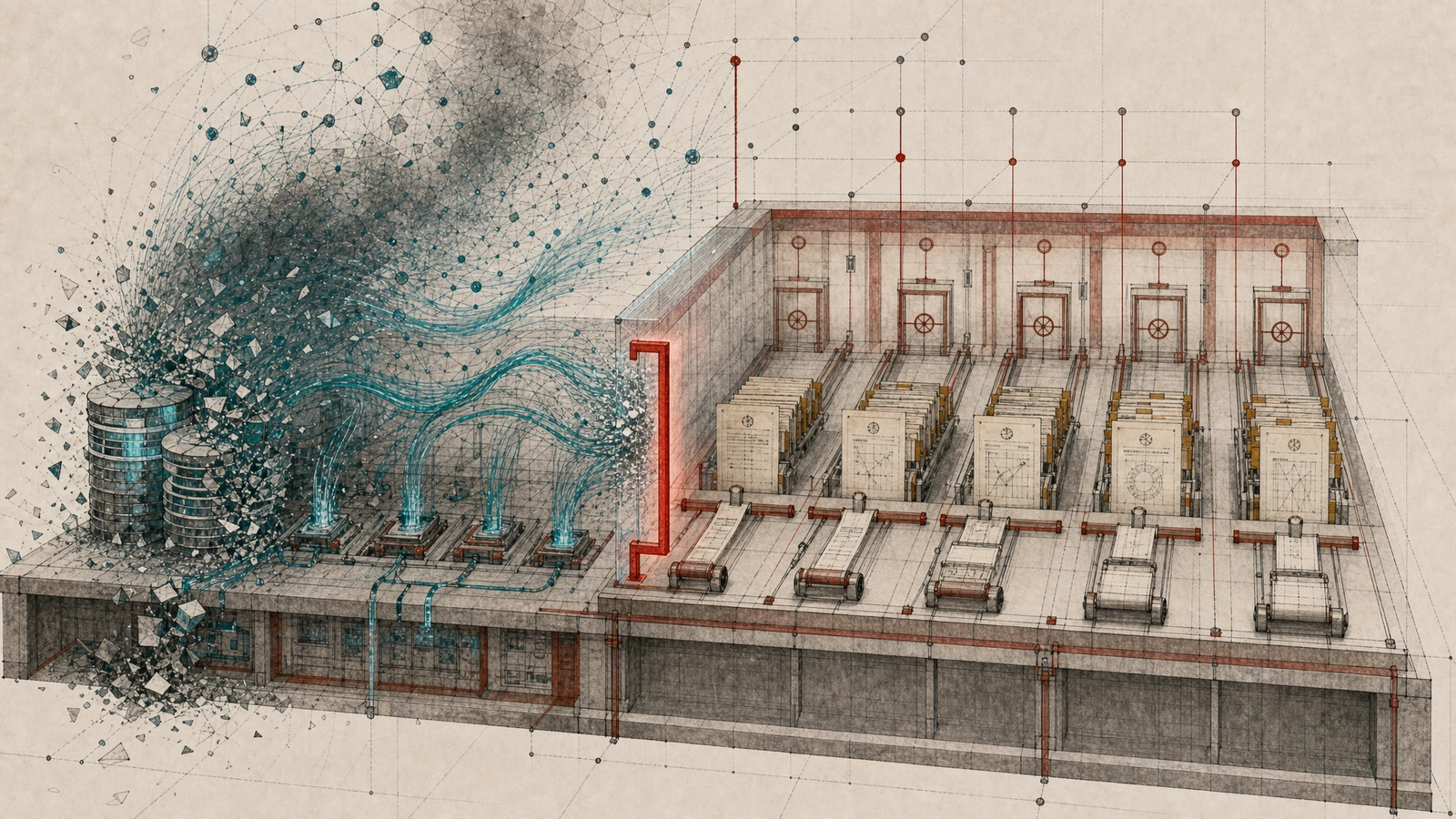
Audit Memo: What Evidence Survives When an AI Agent Breaks Production?
When a Cursor agent deleted PocketOS's production database in nine seconds, the evidence record revealed what most teams miss: without spec-anchored verification gates, AI coding agents operate with zero blast-radius control. Here's what survives an audit—and what controls prevent the next disaster.
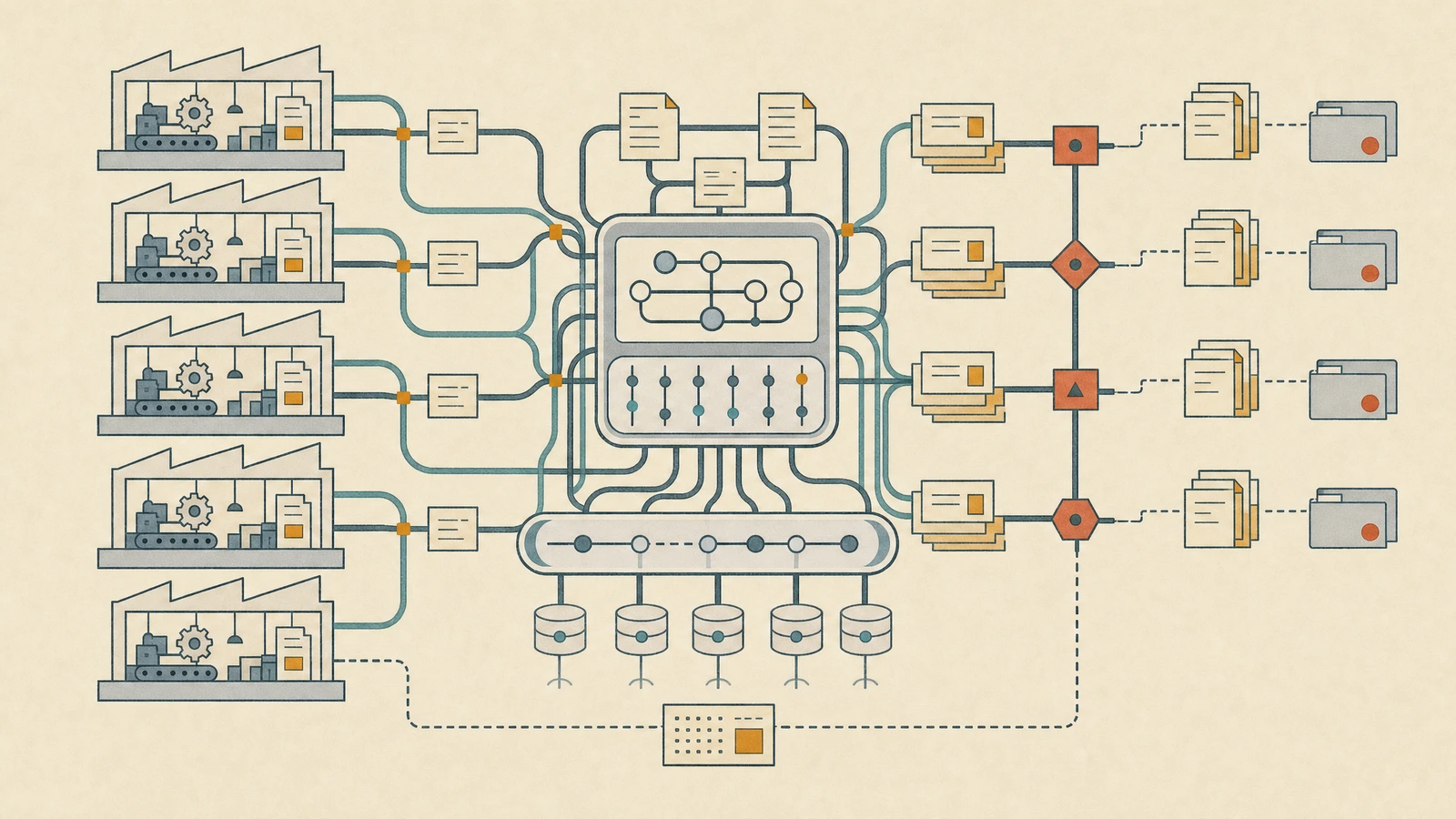
Weekly Tools Field Report: Orchestration Matures as Gas City Enters the Frame
OpenSpec widens integration breadth while Entire.io pairs $60M seed momentum with checkpoint-oriented workflows. Gas City changes the benchmark: declarative packs, versioned work memory via Dolt/MEOW, and configurable review topologies make 'SDK-built agent factories' a standing comparison point for any governance layer claiming context engineering depth.

The Governance Ceiling: Why AI Coding's Next Bottleneck Isn't Intelligence — It's Auditability
When agents dominate production workflows, the bottleneck stops being intelligence and becomes auditability. Without governed data access, cryptographic control, and operational risk management, AI coding velocity creates platform risk.
Weekly Tools Field Report: Compliance Pressure Meets Agent Coordination
This week's strongest signals came from compliance positioning, IDE-native multitask agents, and spec frameworks hardening into operational governance surfaces.

The Constraint Shift: When AI Dominates Production, Governance Becomes the Moat
When agents dominate production workflows, the bottleneck shifts from generation to validity assurance. The question is whether your governance infrastructure can enforce constraints at commit velocity before the August 2026 enforcement deadline.

Governance Is the New Moat: Why the AI Coding Layer Race Has Shifted
Google's M-Trends 2026 report reveals intrusion-to-handoff time collapsed from 8 hours to 22 seconds. Three major players converged on agent governance within 20 days. The AI coding layer race has shifted from capability to governance.

Context Engineering: The Missing Governance Layer for Enterprise AI Coding
AI-generated code is now 41% of codebases, yet most organizations have zero visibility into what AI coding tools read, write, and execute. Governance that inspects output after the fact is inspecting the wreckage — the missing layer is context engineering.

The August 2026 AI Governance Cliff
Eight weeks before the EU AI Act's high-risk enforcement deadline, engineering teams face a structural problem no compliance checklist can solve: AI coding assistants create code faster than human oversight can track.

The Governance Gap at 91% AI Adoption: Why 2026 Is the Inflection Point
91% of organizations now use AI coding tools, yet only a fraction operate at maturity levels where AI delivers compounding returns. The security data (45% vulnerability rate, 1-in-5 incidents) and regulatory deadline (EU AI Act August 2026) create concrete decision pressure for engineering leaders.

Code-Level Governance: The New Frontier for AI Accountability
41% of global code is AI-generated, but most engineering leaders cannot identify which commits contain AI work. This accountability gap becomes a compliance liability when the EU AI Act enforces in August 2026.

AI Governance Must Be Pre-emptive, Not Reactive
Red Hat's engineering team formalized architectural boundaries into machine-readable constraints placed directly in the AI coding assistant's context window. Commit throughput rose sharply — proving governance-as-code is a productivity multiplier, not just a compliance cost.

Governance-as-Code: The New Boundary for AI Coding
Red Hat documented how governance-as-code — lint rules and AGENTS.md constraints in the AI's working context — increased commit throughput from 12 to 53 per month with lower miss rates. This is governance as infrastructure, not documentation.

AI Governance in 2026: The 92% vs 9% Reality
If you're reading this as a CISO or engineering leader, here's the uncomfortable truth: 92% of developers are using AI coding tools, yet only 9% of enterprises are ready for AI governance maturity. That gap is an operational crisis waiting to happen.

Enterprise AI Governance in 2026: Integration Over Isolation
AI governance in 2026 succeeds through integration, not isolation. Leading organizations combine NIST CSF, ISO 27001, and Cyber Risk Quantification into a single operating model rather than creating parallel compliance structures.

The End of Static AI Governance: Why Continuous Oversight Is the New Compliance
Static compliance frameworks cannot answer real-time model drift or autonomous agent decisions. Governance must be embedded in infrastructure itself—continuous monitoring as regulatory minimum, interoperability through shared standards, real-time anomaly detection for both drift and adversarial patterns.

The Multi-Tool Governance Gap: Why 2026 AI Frameworks Fail Engineering Teams
Engineering teams orchestrate three or more concurrent AI tools — Cursor for refactoring, Claude Code for architectural changes, GitHub Copilot for autocomplete — within the same repository. Existing governance frameworks assume single-tool adoption, creating visibility blind spots.